
The Patients and Their Spectators
Journey to the End of the NightThis flow traces the asylum as both refuge and performance space, where treatment, authority, and the display of madness intersect.
increasing Bearing strength in each event
 decreasing
Bearing strength in each eventdecreasingA House for the Misfit
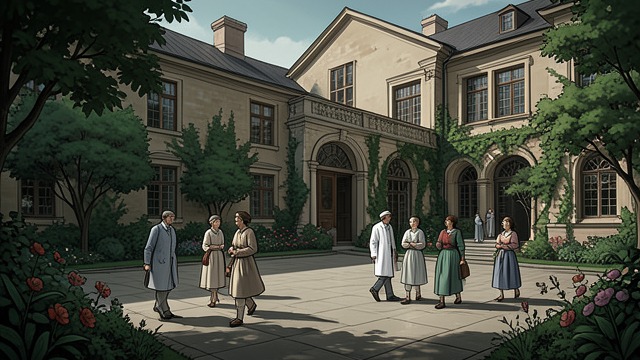
A House for the Misfit
A managed refuge
The rest home receives patients whose families can pay for a controlled environment. Its garden softens the appearance of confinement without removing its institutional authority.
Care as business
Baryton balances therapeutic routines against expenses and reputation. The asylum offers shelter, but its operation remains tied to family money and social expectations.
Therapy as Spectacle

Therapy as Spectacle
Modern treatments
Patients receive electrical devices, baths, and other procedures that are presented as scientific care. The treatments also satisfy families’ desire for visible intervention.
Innovation and display
Baryton purchases equipment partly to appear current beside rival institutions. Treatment becomes entangled with commercial competition and the theater of modern expertise.
The Staff’s Private Life
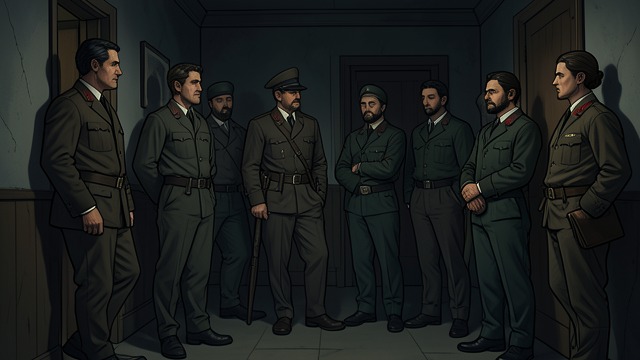
The Staff’s Private Life
Informal permission
Baryton tolerates sexual relationships among staff because he believes they make employees more attached to the institution. Private intimacy becomes part of workplace management.
Unequal freedom
The policy gives the staff limited pleasure without challenging the employer’s authority or low wages. Even apparent permissiveness is organized around institutional convenience.
Patients as Public Performance
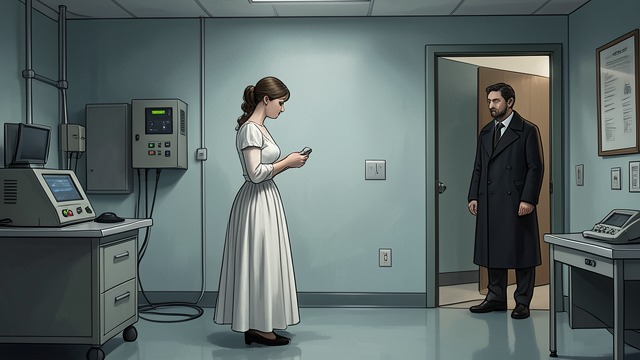
Patients as Public Performance
Managed behavior
Staff control patients’ routines, including masturbation before family visits, to protect the institution’s reputation. Distress is treated as something to regulate and conceal.
The public face
The asylum presents a composed image to visitors while its daily work remains physical and sometimes coercive. Care and performance cannot be cleanly separated.
Baryton’s Departure Changes Everything
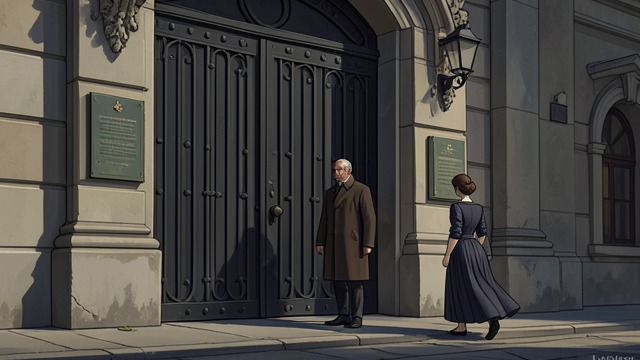
Baryton’s Departure Changes Everything
A transfer of power
Bardamu and Parapine assume the asylum’s management after Baryton’s sudden departure. The institution continues, but its former center has vanished.
A quieter complicity
They maintain routines and protect the business rather than reform it. The asylum becomes another place where survival depends on adapting to compromised arrangements.
When Bardamu begins work at Vigny
During Bardamu’s early months at the institution
During Bardamu’s employment at the rest home
During the asylum’s routine visiting seasons
After Baryton leaves for England
